
–
–
Mercredi 20 janvier 2027 – 19 h 30
Chapelle Notre-Dame-de-Bon-Secours
400, rue Saint-Paul Est
Montréal, H2Y 1H4
 Bus : 170, 30, 350, 355, 364, 365
 Metro : Champ-de-Mars
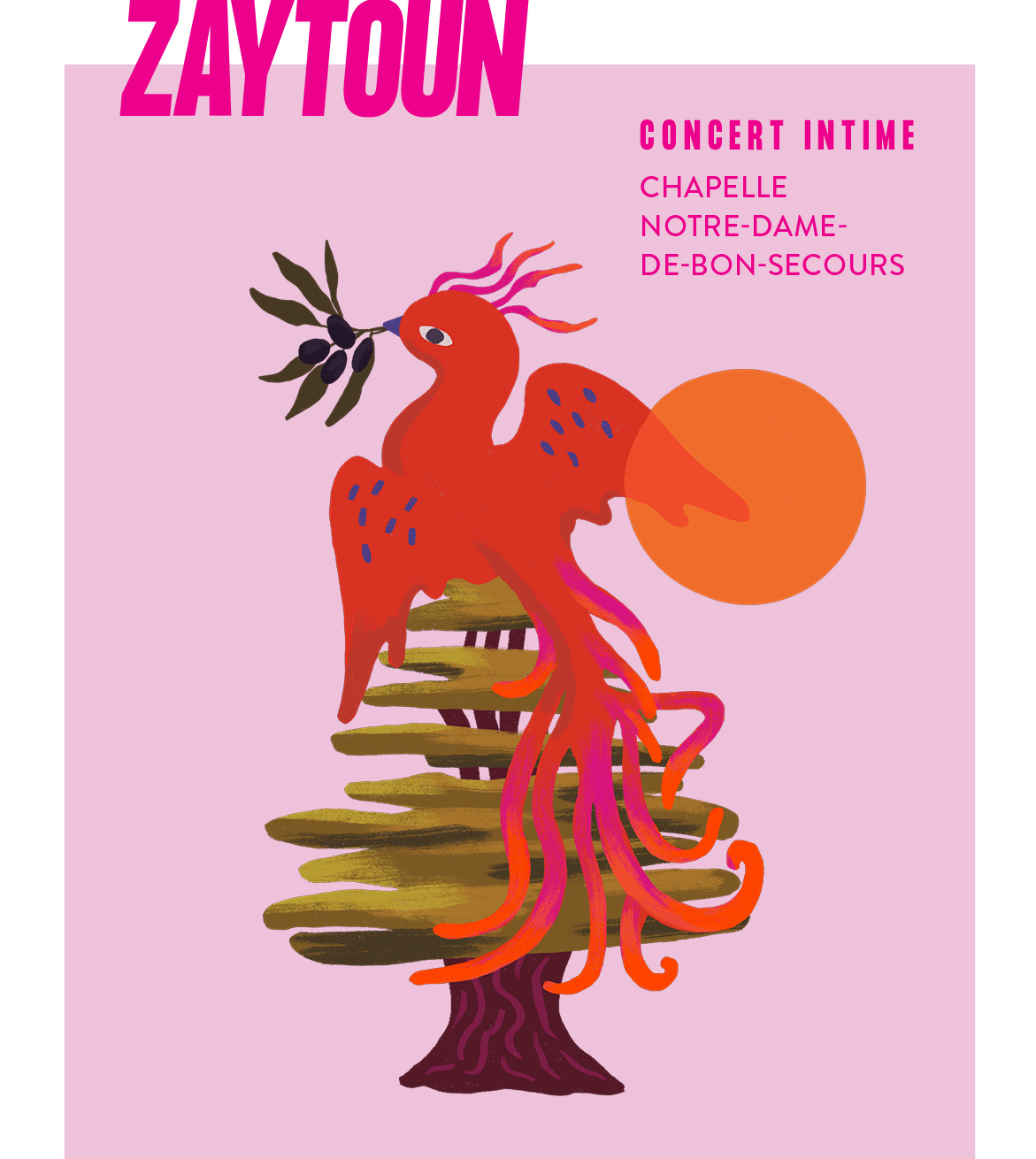
À l’ombre d’un olivier, enracinés quelque part entre le Liban, la Palestine et Montréal, des souvenirs d’enfance se mêlent aux échos d’un ailleurs réinventé. À travers la musique vocale, Zaytoun — qui signifie « olivier » en arabe — incarne un ancrage profond face à l’exil, porté par le chanteur libano-palestinien Haitham Haidar. Symbole fort de la terre, de la mémoire et de la résistance palestinienne, ce concert célèbre conjointement les traditions musicales du Levant et de l’Occident.
Gibran Khalil Gibran (1883-1931)
On Love (The Prophet)
Claudio Monteverdi (1567-1643)
Nigra sum (Vespro della Beata Vergine) – Song of Solomon
Sayed Darwish (1892-1923)
El Helwa Di
Sayed Darwish (1892-1923)
Zourouni
Henry Purcell (1659-1695)
John Dryden (1631-1700)
Music for a While (Oedipus)
Wa Habibi – Trad. Arabic
Khalil Gibran (1883-1931)
Intermezzo: On Joy and Sorrow (The Prophet)
JS Bach (1685-1750)
Picander (1700-1764)
Haitham Haidar (b.1991)
Ruhmaka ya Allah (Erbarme dich, mein Gott BWV 244)
John Danyel (1564-1626)
Samuel Danyel (1562-1619)
Grief, Keep Within
Joaquín Rodrigo (1901-1999)
Joseph Harb (1944-2014)
Li Beirut
Honoré d’Ambruis (1660-1702)
Le Doux Silence
Khalil Gibran (1883-1931)
Postlude: On Death (The Prophet)
Haitham Haidar, ténor
Abdul-Wahab Kayyali, oud
Abraham Ross, clavecin
Amanda Keesmaat, violoncelle baroque
Sylvain Bergeron, archiluth
Tanya LaPerrière, violon baroque